
A practical decision guide for southern Wisconsin and northern Illinois property managers.
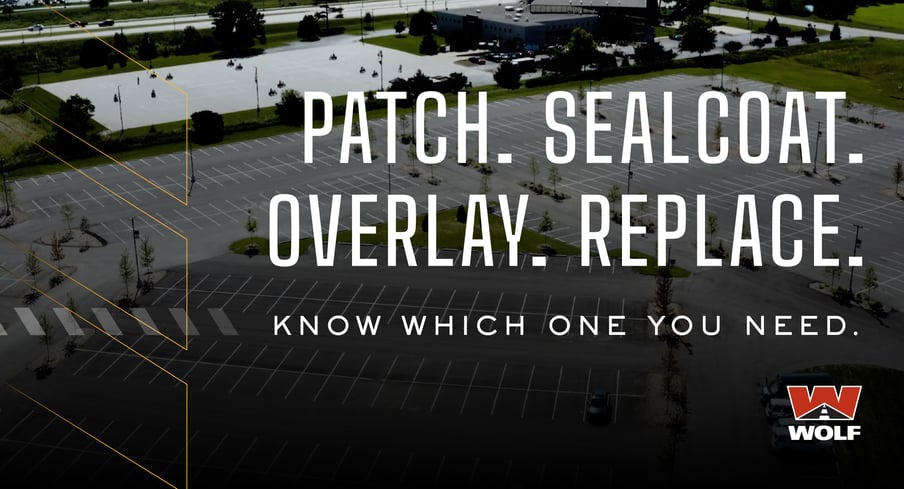
Your parking lot takes a beating. In Wisconsin and Illinois, that's not a figure of speech. Between freeze-thaw cycles, snowplow blades, salt, and daily traffic, commercial asphalt here faces conditions that accelerate wear faster than most of the country. Small cracks that form in late fall can become potholes by April.
The question most property managers ask us isn't "should I maintain my lot?" They already know they should. The real question is: what kind of maintenance, and when?
Here's a straightforward guide to the four main options and how to know which one fits your situation.
Crack Filling and Patching
Best for: Early-stage damage. Isolated cracks and potholes in an otherwise sound lot.
This is your first line of defense, and the most cost-effective move you can make. Cracks under a quarter-inch wide can be sealed before water gets in. Potholes can be patched before they spread. Done early, patching protects the structural base beneath the surface and delays the need for more expensive repairs down the road.
What patching won't do is fix a lot with widespread damage or a compromised base. If you're patching the same areas every season, that's a signal you've moved past the patch-and-hold stage.
Signs you need patching: A few isolated cracks or potholes, damage that covers less than 25% of the lot's surface, a lot that's otherwise in reasonable shape.
Sealcoating
Best for: Preventative maintenance on lots in good condition.
Sealcoating applies a protective layer over your existing asphalt. It seals out water, UV rays, and vehicle fluids that gradually break down the pavement. It's not a repair, and it won't fix structural problems. But applied at the right time, it significantly extends the life of your lot.
In midwestern climates, most commercial properties should plan for sealcoating every two to three years. Timing matters: sealcoating needs warm, dry weather to cure properly, so late spring and early summer are the practical windows here.
One common mistake is applying a sealcoat over unresolved cracks or failing areas. Sealcoating can hide damage, but it won't fix it. Fill cracks and patch problem spots first.
Signs you need sealcoating: The surface looks faded or gray (oxidized asphalt), you're within your two-to-three-year maintenance window, the lot is structurally sound with no base failures.
Asphalt Overlay
Best for: Lots with widespread surface wear, but a structurally intact base.
An overlay adds a new layer of asphalt over your existing surface. It's a mid-lifecycle solution, more involved than patching but far less disruptive and expensive than full replacement. Done correctly, it resets the clock on your parking lot at a fraction of the cost of starting over.
The critical condition: the base has to be sound. Drainage problems, widespread base failures, or structural issues beneath the surface will work their way back up through the new material relatively quickly. A good contractor will assess the base before recommending this route.
Mill and overlay takes the process a step further, grinding down the worn surface before the new layer goes on. This addresses more significant surface deterioration and produces a better long-term result than overlaying directly on top of existing damage.
Signs you're a candidate for overlay: Surface wear is widespread but the base is stable, you're seeing surface cracking across most of the lot, repair costs are starting to approach overlay costs, the lot is roughly 10 to 15 years old.
Full Replacement
Best for: Lots with base failure, drainage problems, or pavement that has reached the end of its lifecycle.
Sometimes the right answer is to start over. Full replacement means removing the existing pavement, addressing any base or drainage issues, and installing new asphalt from the ground up. It's the most significant upfront investment, and it's the one that delivers a fresh 20-to-30-year lifecycle when the work is done right.
The indicators aren't subtle. Alligator cracking across large sections of the lot, heaving or settling, potholes that return after patching, drainage that pools where it shouldn't. If more than 30 to 40 percent of your lot needs repairs, replacement often makes more financial sense than continued patching.
Signs you need replacement: Widespread base failure or alligator cracking, repeated patching in the same locations season after season, drainage issues that have never been properly addressed, a lot that's approaching or past 25 years with inconsistent maintenance history.
The Southern Wisconsin & Northern Illinois Factor
Most parking lot maintenance content is written for warmer climates. Midwest property managers face specific timing constraints. Asphalt work generally can't be done below 50°F, and sealcoating requires temperatures well above that to cure correctly. The practical working window in our region runs roughly late April through October.
If your lot needs significant work, getting on a contractor's schedule early matters. Spring is the busiest time of year, as everyone who deferred fall work discovers their winter damage at once.
Start With a Walk
Before calling anyone, spend 15 minutes walking your lot and taking photos. Note where the cracks are, how wide, how many. Look for areas where water pools after rain. Check whether potholes are isolated or spreading. That information will help any contractor give you an honest read on where you actually stand.
Wolf Paving manufactures its own asphalt and operates its own quality labs, which means the recommendation we make is connected to what we can actually deliver. We've been serving commercial properties primarily in the Milwaukee and Madison markets since 1941. If you're not sure where your lot falls in this framework, we're glad to take a look.
About Wolf Paving
Since 1941, Wolf Paving has specialized in asphalt manufacturing, paving, and maintenance. We manufacture our own asphalt and install it with our own crews, giving us complete control over quality from chemistry to finished surface.